
6th Annual General Meeting of the Market Research Association
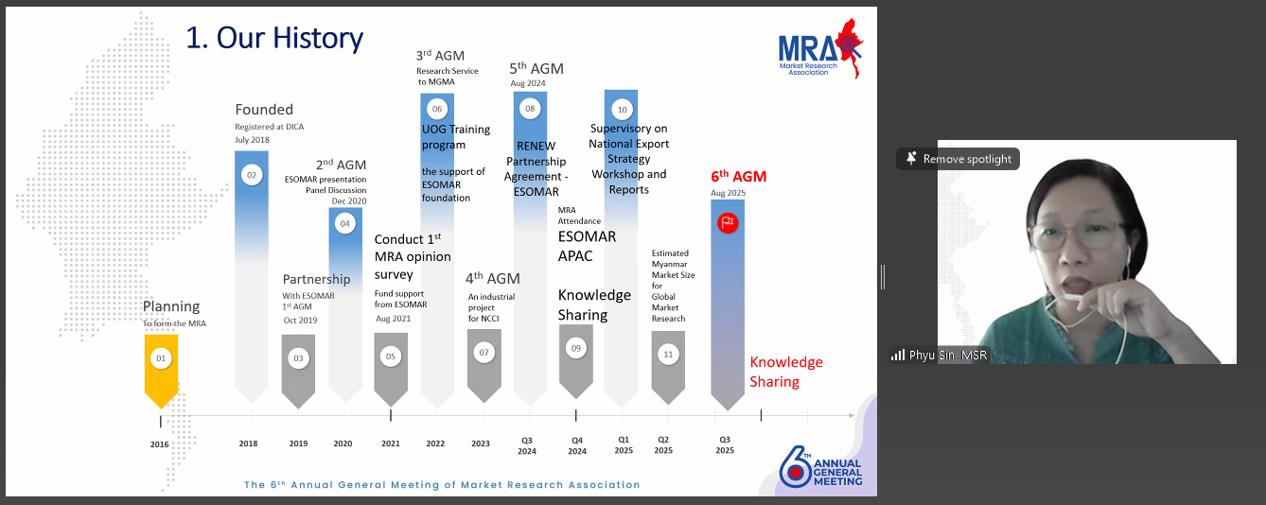
MRA Chairman U Aung Min delivered the opening remarks, noting that since its inauguration ceremony in 2018, the MRA’s annual meetings have continued onto its fifth iteration, and the MRA’s two key objectives have been the growth and development of the market research industry and the enrichment of its researchers and employees.
ESOMAR, a World Research Organization, has been supporting the MRA’s commitment to knowledge and development of its employees, through trainings and workshops since 2014. ESOMAR will launch a revised Code of Conduct in line with changing situation and AI development.
Development of Market Research Industry – In the annual statistics that the MRA presents to ESOMAR, the market size estimates in 2024 remained below 30% of its 2019. Although the market size has shrunk, research agencies have continued to operate till now by sticking to their respective strengths and specialties.
Future Plan – The MRA is committed to enriching and developing the skills and knowledge of researchers and employees. The MRA will continue its activities as intended as much as possible, and to reach clients and partner organizations more effectively. The chairman also stressed the importance of inter-agency collaboration and the invitation of research consultants and agencies yet-to-be members for the development of the market research industry.

(In the side line of AGM)
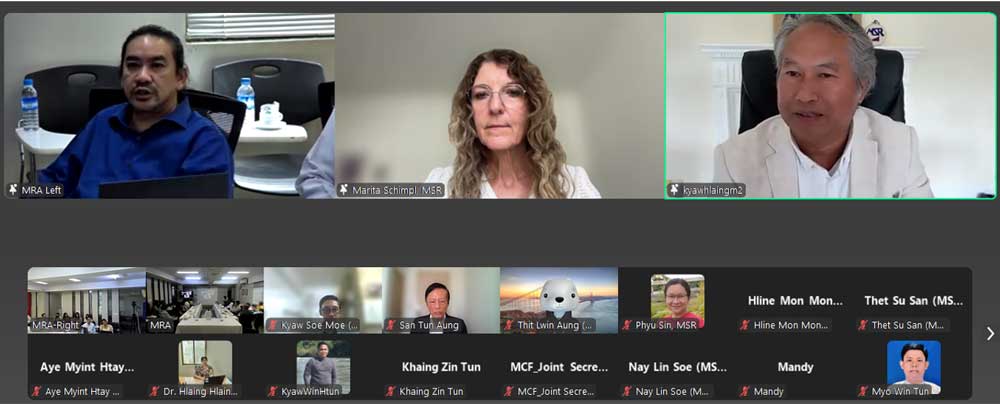
- Despite a challenging environment, there is strong demand for research to uncover root causes and inform policy responses
- Independent institutes may engage in small-scale operations with upscale work through int’l support
- Contextual and conflict-sensitive methodologies shall be considered in data collection.
- Rigorous training and continual mentorship programs are vital for researcher safety, accurate data collection and ethical compliance
All the above will ensure sustainability and growth of social research capacity in Myanmar.
The demand for social research is expected to grow due to several factors:
- Third party monitoring: End line assessment and third-party monitoring
- Impact assessments: Impact assessments and Project MNEs on Mandalay Earthquake in affected areas
- Persistent data gaps: Reliable data remains scarce, hindering informed decision-making.
- Donor priorities: Funding is increasingly directed toward research on digital rights, gender, and marginalized groups.
- Policy relevance: Stakeholders—including UN and CSOs and some others—prioritize research whose findings inform immediate interventions, programming and advocacy.
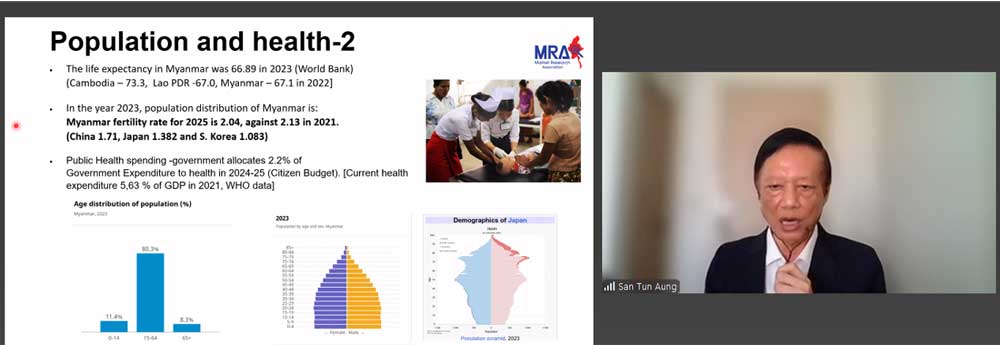
- Overall economy is contracting, with negative GDP growth, weak trade and investment and limited prospects for near-term recovery.
- The earthquake is projected to cause output losses of about 4 percent of GDP (US$ 2.6 billion) in FY2025/26
- Conflict and natural disasters continue to undermine nearly every sector—from agriculture to manufacturing sector
- Selected infrastructure and energy projects -may offer long‑term growth if geopolitical and security conditions permit.
- Research agencies are currently facing significant challenges that limit their opportunities and hinder their effectiveness in industry research, both now and in the medium term.
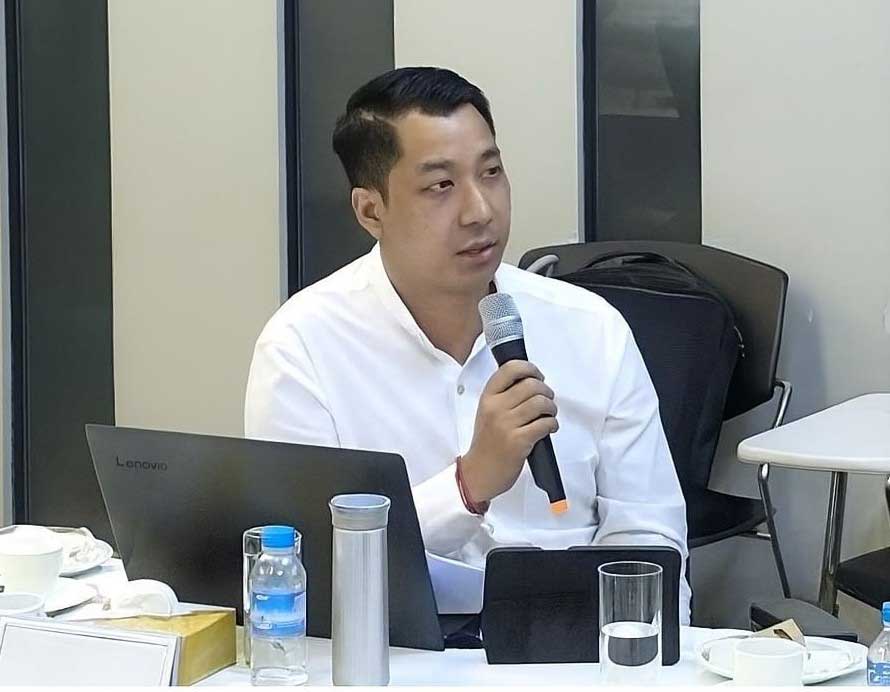
With the rise of the digital age, consumers are increasingly showing “Phygital” behaviors that blend both physical and digital worlds. (For example – consumers search for product and service information online, but when it comes to making actual purchases, most still tend to buy offline.)
We also see the rise of Micro-Indulgences—small luxuries people pursue to bring momentary satisfaction. During times of economic hardship, when larger purchases are out of reach, consumers increasingly seek comfort in minor treats and affordable luxury items.
Youth Dominance is another defining trend: in Myanmar and much of Southeast Asia, the majority of the population is young, with urban youth aged 20–34 standing out as highly tech-savvy Digital Millennials.
However, when looking at the country as a whole, about 55% of households still fall into the category of “Value Seekers”—low-income groups that focus heavily on affordability.
For the Research Industry, this shift presents both challenges and opportunities. Traditional research is declining, while businesses now demand accurate analysis of their existing data to support decision-making. This creates growing demand for Data Analytics & Reporting Services.
Experts also highlight the phrase “No AI without IA”, reminding us that without proper real input data and information architecture, we cannot expect AI to produce truly useful insights.
From this, companies are building consumer personas that reflect the blending of the physical world (offline) and the digital world (online), in order to better understand and respond to the modern consumer.


Contact Information
No. 42, Mingalar St., Sanchaung Township, Yangon, Myanmar
Email : info.mrayangon@gmail.com
Ph : +9517500236
copyright@2018 The market research association. All Right Reversed.